Wednesday, August 7, 2024

Knotting and unknotting, binding and unbinding, tangling and untangling (LH)

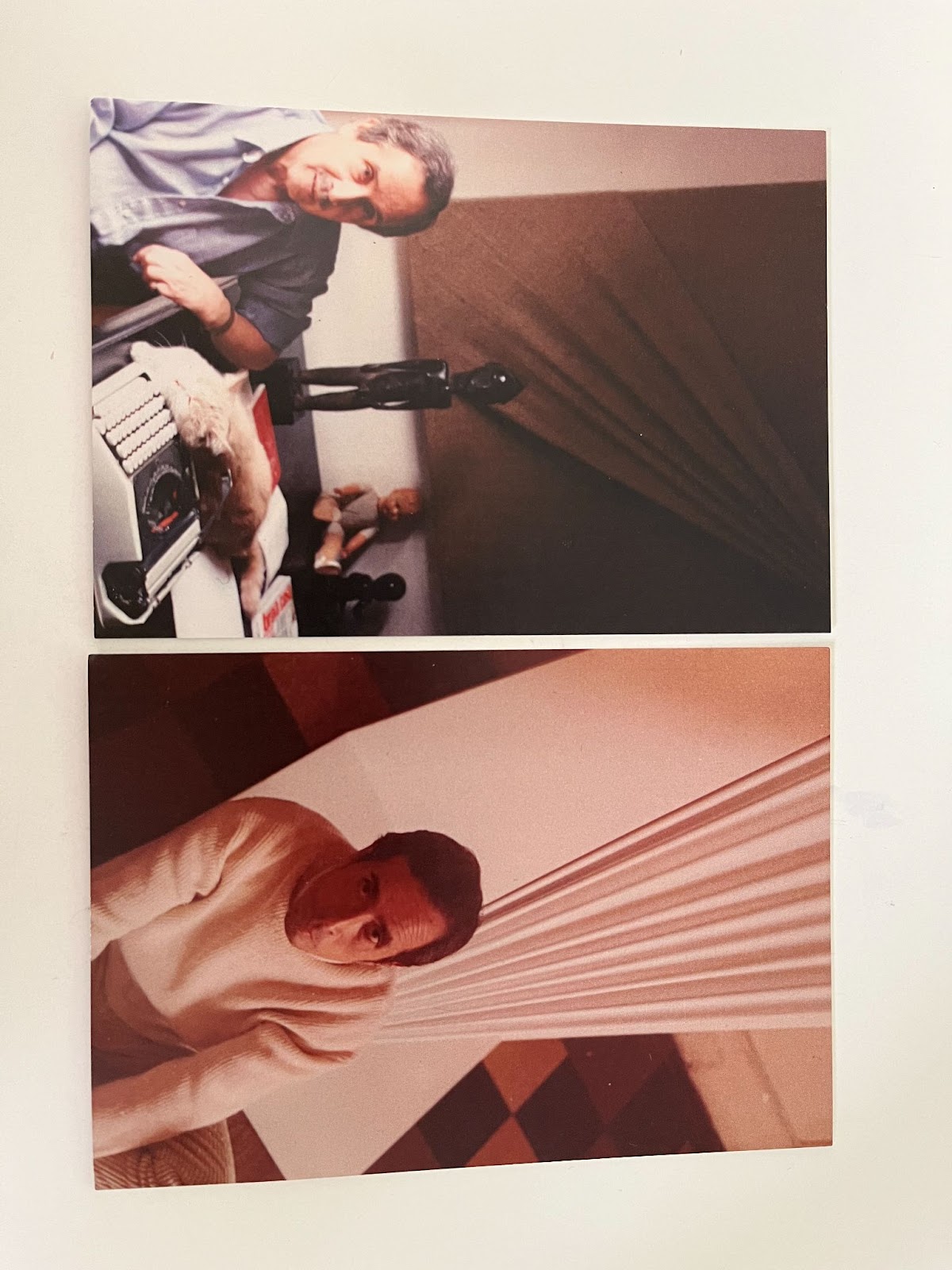
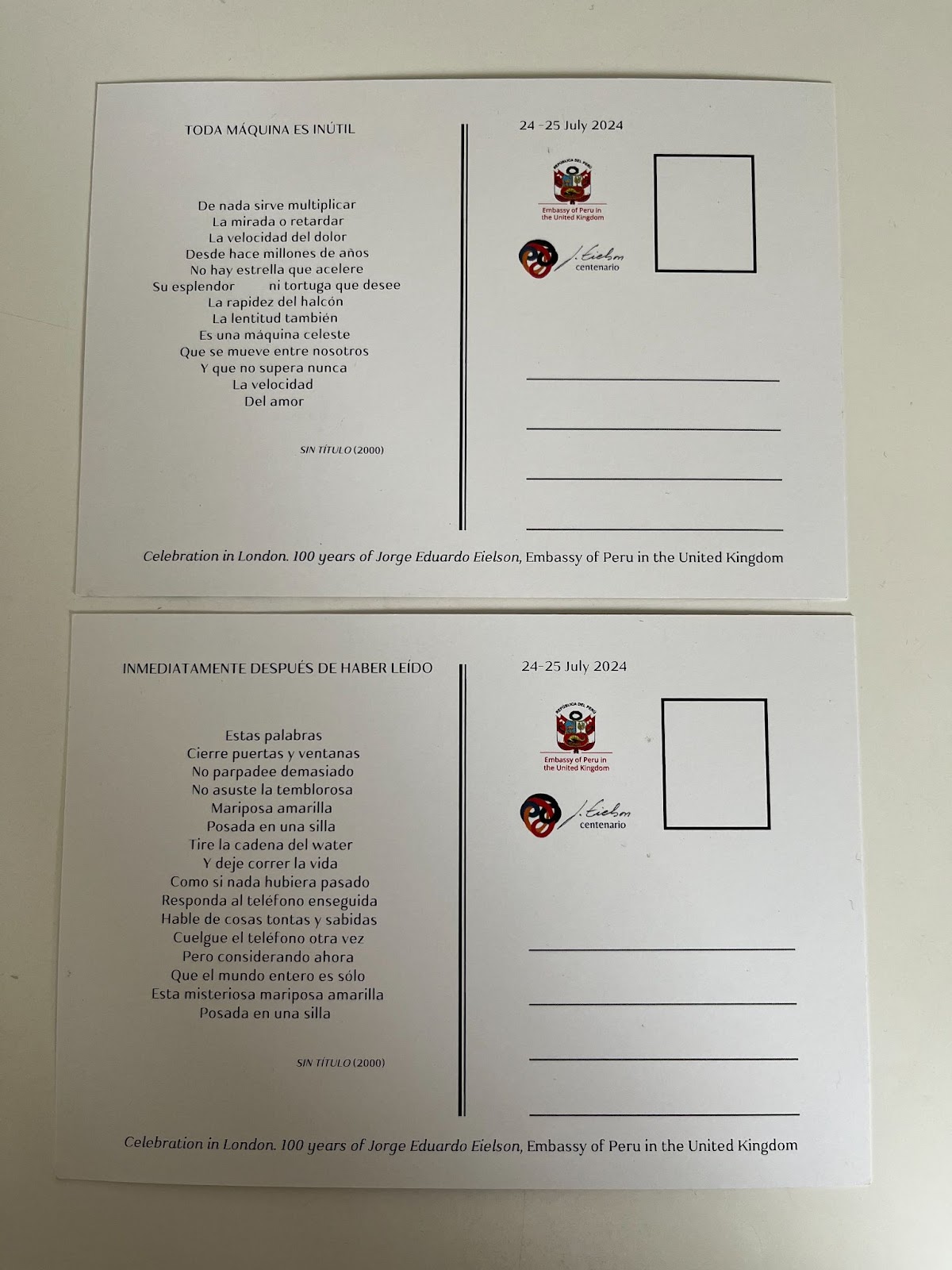
Below: Untitled, 2000, 2 poems by Jorge Eduardo Eielson, trans. LH from the Spanish on the back of two postcards left on chairs at the Peruvian Embassy, London, 24–25 July 2024.


Will Rowe spoke of knotting (in the form of quipu in Eielson’s work and in Indigenous cultures more broadly (see Cecilia Vicuña’s work for ex.), as well as an alphabet of sorts constituted of knots – nudos) and how knots may be undone but it takes a long time to undo them (think of undoing tangled/knotted necklace chains, separating them out…).

Do knots need to be undone? / Should they be? When? By who? (Codification, symbolism, secrecy, private and public language, Latin American mestizaje… Eielson was involved in the production of a new kind of mestizaje from Lima, from the coast, and then from a place of exile – Eielson made work in Europe with materials exported by friends from Peru, including black sand applied to the surface of paintings.)

Eielson’s series of nudos constituted a kind of alphabet; a new language. How to understand his practice as an artist in relation to his practice as a poet?

—

Learning how to tie knots in the navy in the film Cerrar los ojos by Víctor Erice (2023) – film director protagonist showing photos to the disappeared friend he learned to tie knots with and the latter’s lack of recognition / denial / forgetting in response… ‘La idea de cambiar la identidad y de rehacer la vida en otro sitio’ (The idea of changing one’s identity and of remaking one’s life in another place).


1
EVERY MACHINE IS USELESS

It’s no use multiplying
The gaze or delaying
The speed of pain
For millions of years
No accelerant star has existed
Not its splendour nor the tortoise who desires
The falcon’s speed
Slowness, too
Is a celestial machine
That moves between us
And nothing beats
The speed
Of love


2
IMMEDIATELY AFTER HAVING READ

These words
Close doors and windows
Don’t peep too much
Don’t make the trembling one jump
Yellow butterfly
Resting on a chair
Pulls the chain
And lets life go
As if nothing would have happened
She responds to the phone so quickly
Speaks of things stupid and wise
Hangs up yet again
But now considering
That the whole wide world is just
This mysterious yellow butterfly
Resting on a chair


—

https://lemelle.substack.com/p/taylor-le-melle-in-conversation-with?utm_source=podcast-email&publication_id=847199 


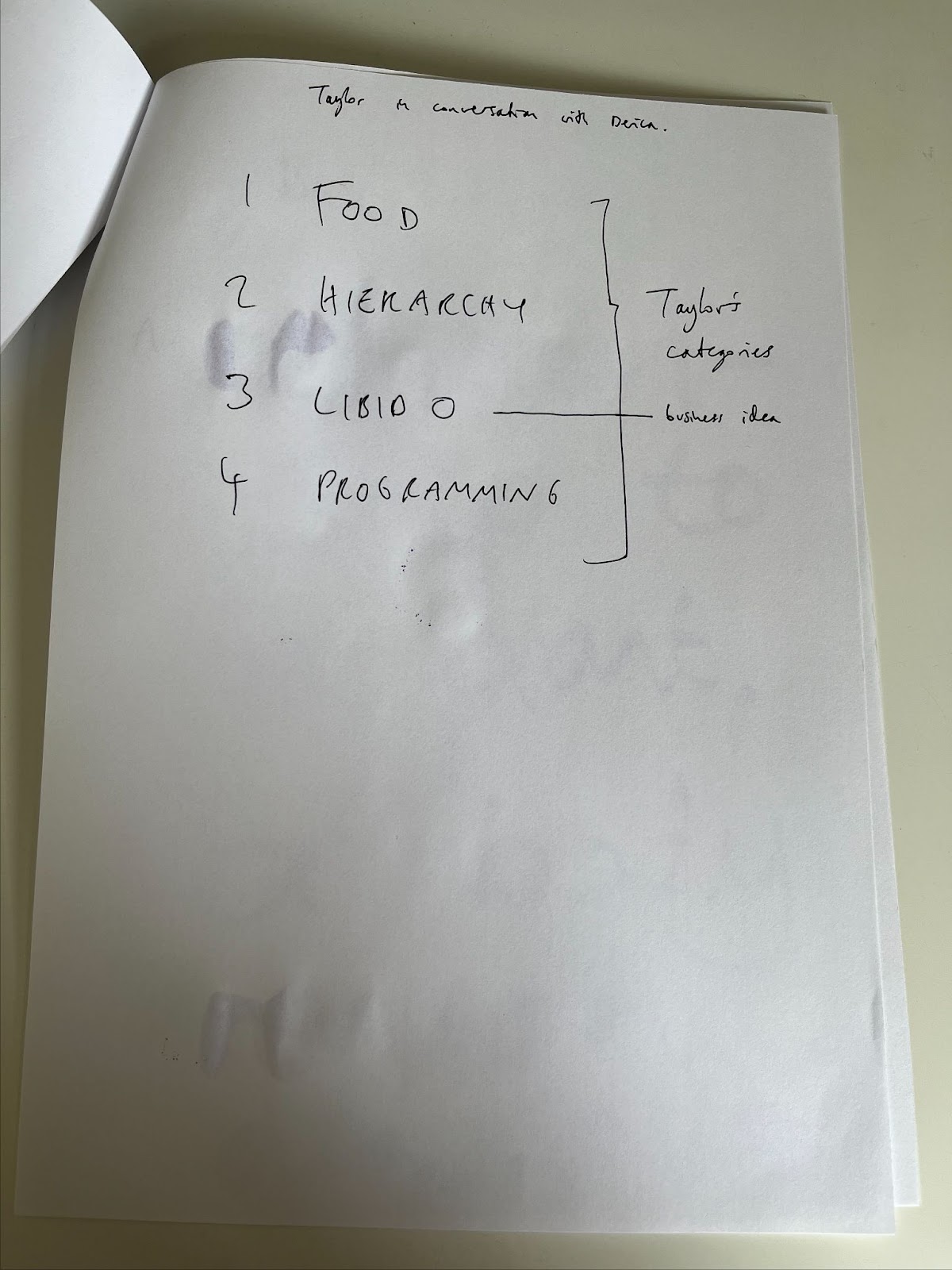
Notes from Taylor Le Melle in conversation with Derica Shields

Is it about the book, specifically?


The idea of not legally being able to engage with a book – there are banned books


—


From $$ ABOMUNUS CRAXIOMS $$ by Bob Kaufman:

[...]

People who read are not happy.

People who do not read are not happy.

People are not very happy.

These days people get sicker quicker.


[...]

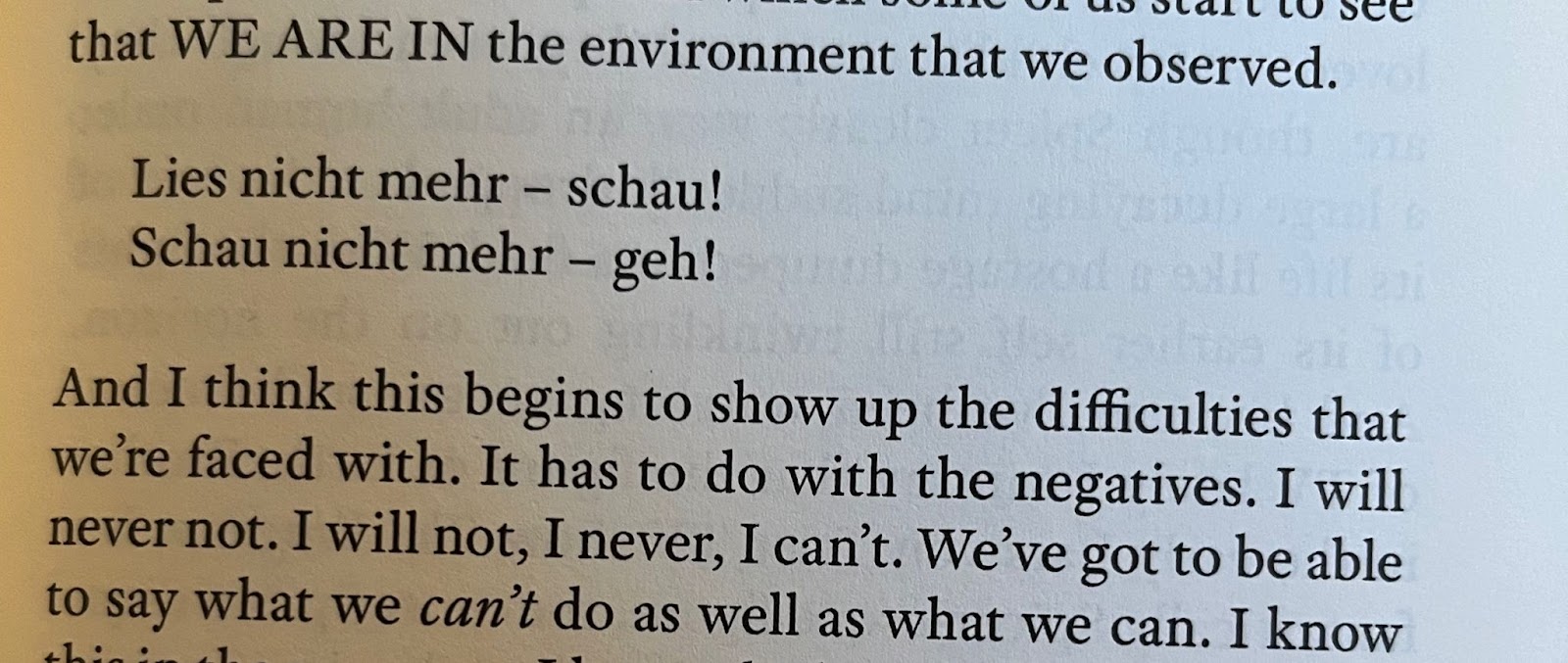
See Danny Hayward, in particular p. 29 of Training Exercises on doing and looking and reading. Also on politics as something we do and on poetry as a way to transform the self and also as a means of survival… on the ‘we’ as being worth defending. On the square within the circle. On the forest and the nymphs and what they represent / who they could be.

—


Taylor Le Melle:

‘The mobilisation… of forms, that spring up in order to support a goal’

‘The motivation behind developing the technology of film and photography had colonial stakes’

‘The people who are writing the novels at the time of the ship’s expansion… had a number of other people working on their behalf’

Someone facilitates the need to not have to labour


Derica Shields:

Lord Byron and Shelley were on vacay together… this form is coming out of a specific relationship to leisure and free time, certain ideas about the monster and the other… a sentimental education

Taylor:

‘That’s why I’m saying violent assimilation’

‘Liberatory politics centred around reading every word ever printed’

^ that ideology

‘What are you supposed to do?’

Curiosity and playing around

Opacity and specificity

‘This is not instruction’

‘Decisive or unrelenting about doing it this way’

‘A nothing to lose thing’


[Show a clip, c.42:27]


Discussion of intimacy by Hortense Spillers

‘If intimacy is not reliable…’

‘Sentimentality and feelings of love can be shown to be unstable [...] across the social order’


LISTEN

‘A cultural history of touch…’

‘Bodiedness associated with juridical… due process’

‘Flesh describes… a more or less expendable figure’

‘The alien does not have access… to ward[ing] off another’s touch’

Loss of freedom – ‘bodies lose their integrity and may be invaded by coercive power’

Immediacy in relationship to the slave, robs the touch of its… becomes the power to wound and violate

See Audre Lorde on the erotic

Man who focused on the visual world, the ‘eye’ man was positioned at the top

The skin man, was positioned at the bottom


‘Touch… has nothing to do with the erotic… or does it?’ – Spillers realises this is a question

—


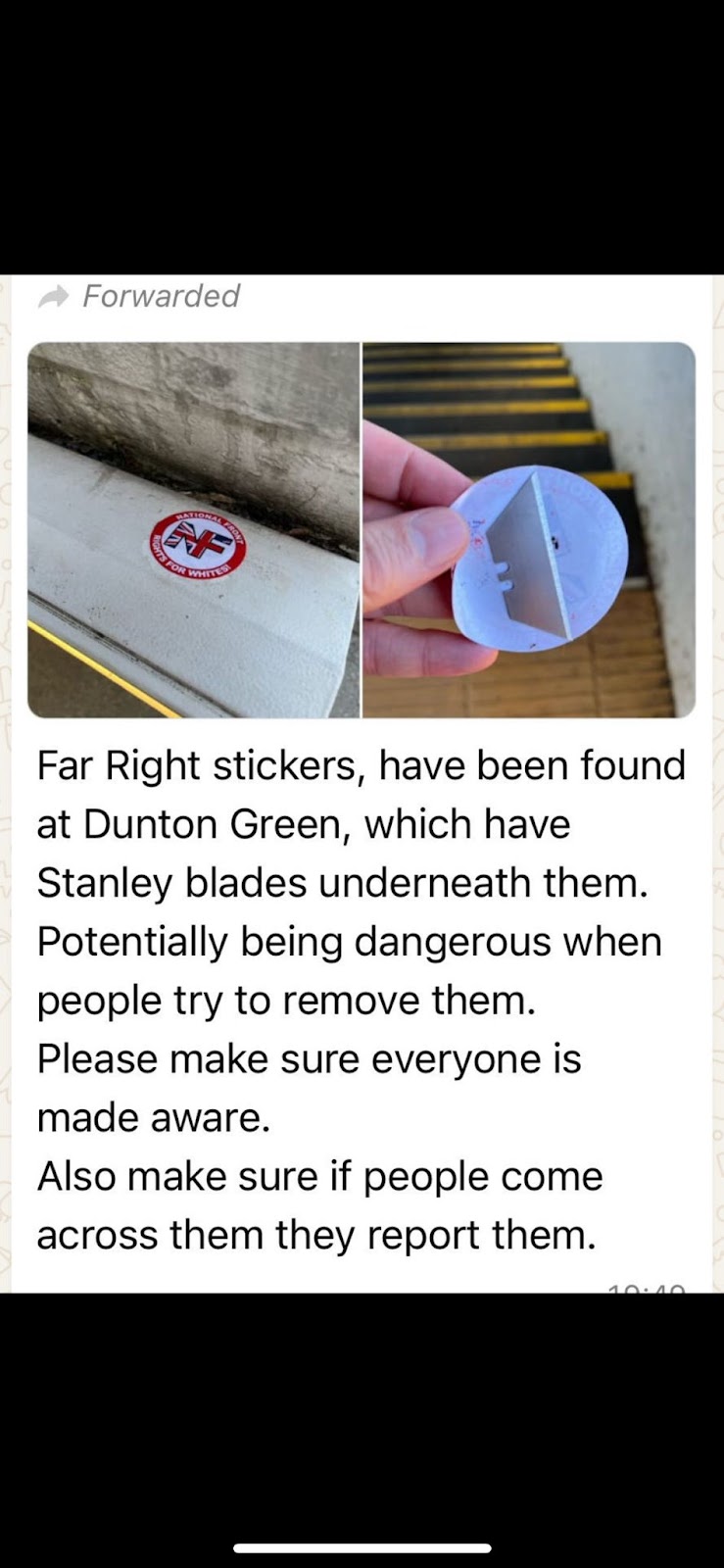
What does self-defence look like/what forms can it take when we are seeing stickers left by fascists in the streets concealing Stanley knife blades? Other than removing them safely, what shall we do? How will we organise?

—  


Ways of distinguishing human life from bare or animal life…


[Clip ends c.49:56]


1:00:52

Say whatever your categorization is means that you are, means that you are, whatever your categorization or your situation is means that you got to live on 300 calories a day or you have like a chronic kind of like lack of access to vitamin C or like, so, you know, these are like real things that these policies create,


right? Like we have, and this is happening right now. It's not just, you know, right? Right. So it's like, and then whoever survives that does not escape the reproductive labour of reproducing the world, right? Creates more flesh and tells that flesh it's very important to read books. You know what I'm saying?


1:08:40
that's what massage therapy is it's like making a relationship for like four hours a day with four different people it's like okay this is the relationship we're gonna have for this hour this 90 minutes um And figuring that out together, right? Like it's never going to be the same every time.


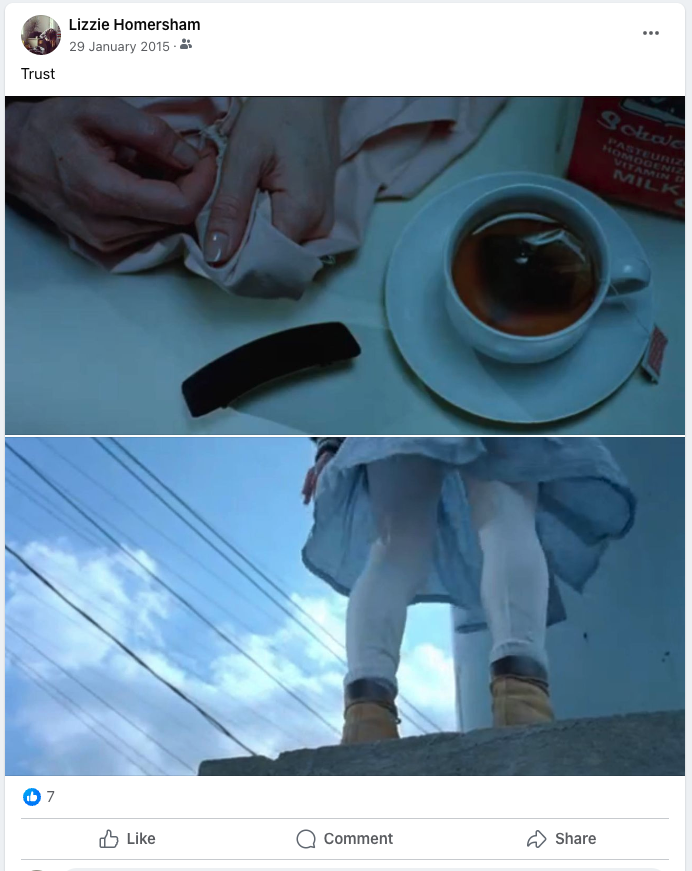
TRUST
And loss of trust, politically, and erotically/libidinally, in others, in oneself…


2 screengrabs from Hal Hartley’s film Trust (1990) posted 2015 ^
Domestic space in Hal Hartley’s films

Knotting and unknotting (in Eielson’s work)

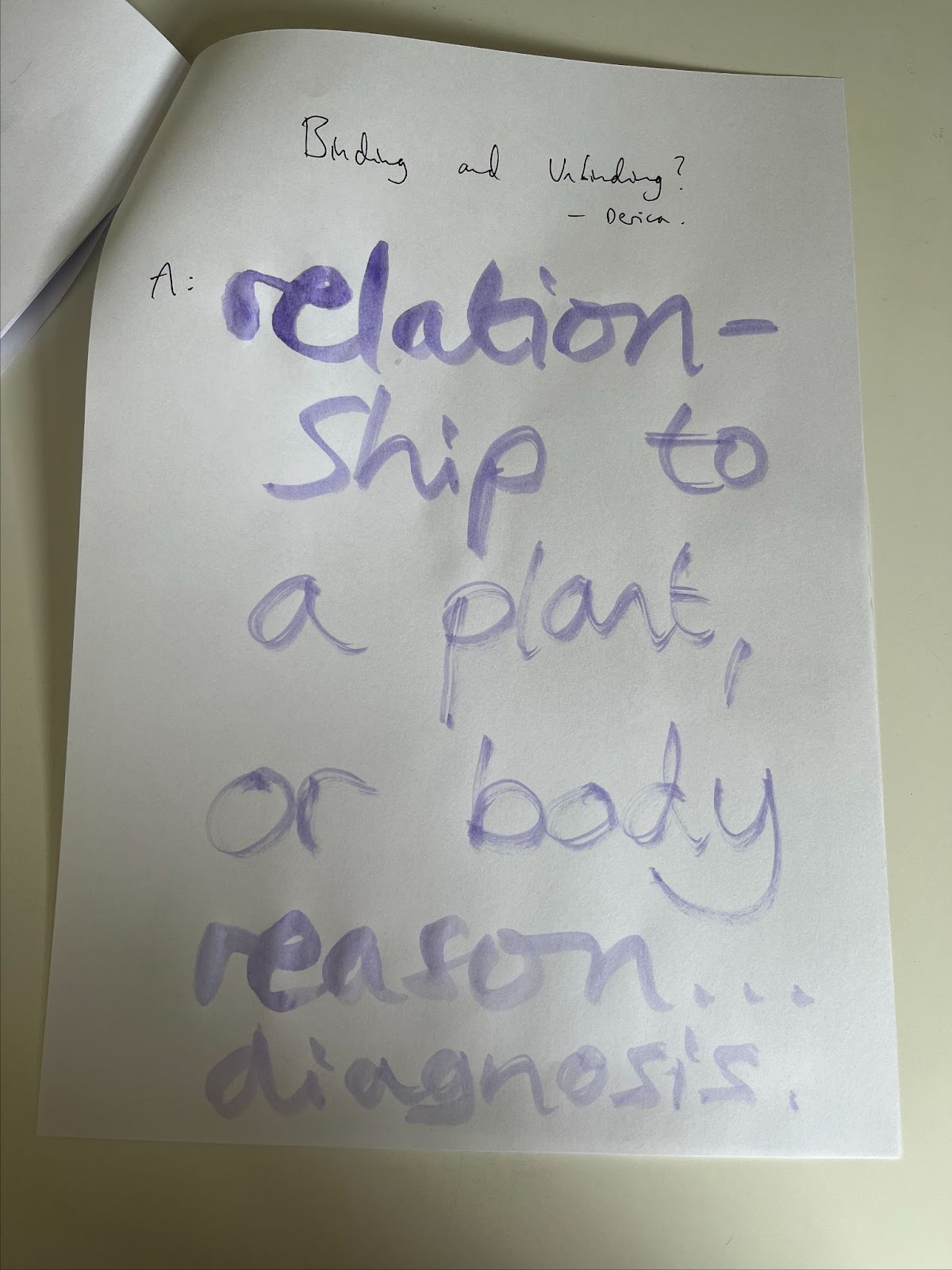
Binding and unbinding (Derica and Taylor)


Threads of thought in Marina’s talk with Andreas Petrossiants (‘tangling and untangling’): https://www.e-flux.com/podcasts/407867/marina-vishmidt-speculation-as-a-mode-of-production 


Contemporary capital and contemporary art… parallelism… the image of work.
Speculative negation…

‘Art is [...] an emancipatory activity… that can be commodified’

Open and closed forms of speculation: speculative fiction may be proximate to utopian approach
Speculative gambling, casino understanding of the nature of capitalism today (creates more of itself… a present of returns predicated on enclosing the future)
Open speculation (of art) is imbricated in… closed speculation

‘Situated movements in time and space’
Conventional understanding of autonomy is a kind of scripted non-performance

Mix of methodologies also reflects the process of putting it together over a long period of time


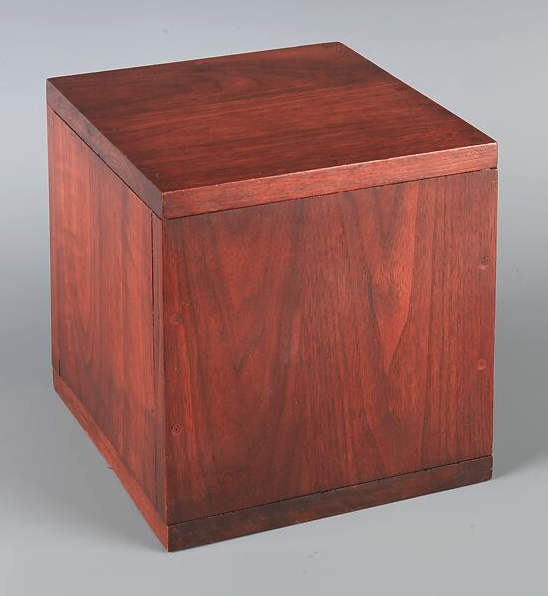
Robert Morris, Box with the Sound of Its Own Making, 1961

Trying to practise a negative dialectical, homemade approach that practises its politics in the field of theory… traces mediations between

13:00
‘Tangling and untangling’

14:30 – the turn to conceptualism and performance

—

The turn of visual artists to poetry and vice-versa / the combination of these practices, often with music (see e.g. Egg Meat quoting Bob Kaufman at SET Peckham last week).


→

7 August
(After reading more Training Exercises)

Binding and unbinding in Will Rowe’s response to Danny’s report ‘On Denial’:
https://communityofgoods.blogspot.com/2023/05/letter-to-danny-14523-wr.html

Freud’s notion of ‘binding’ came into the conversation at the recent Mayday Rooms meeting. Freud’s use of the term, where binding works in terms of ‘an energy which flows along chains of ideas and implies associative “links”’, suggests a possible cross-over between inner life and the political outside. When you write ‘there is no outside to an injury’ are you posing this as an outside where resolution might have been possible? I want to say that a wound with no outside is the pair of a situation with no solution—a situation where words are stuck in chains of association that perpetuate an impasse. Not that individual wound and social wound are homologous, but that they exist in a certain relation to each other. What kind of relation? The insistent trauma-talk of narcissistic selves falsifies the relation. Once you accept that life is suffering, you can accept the challenge of living. That’s Jordan Peterson speaking, and inside his voice the long history of voices that have said that suffering is an entirely internal matter, a belief highly acceptable to capitalism. Individual wound and social wound are not homologous but what they have in common is isolation.

Rimbaud’s poem ‘The Drunken Boat’ sums up a basic element of Leftist tradition: to break all moorings, the call to rebellion as radical subjective unbinding, the legacy of the Paris Commune gathered into that call, that cell of meaning. That Rimbaud got labelled a poète maudit was a manoeuvre of bourgeois literature, we know that. The boat lands in Africa and finds itself facing white men with firearms: subjective emancipation includes colonial violence. That’s the corrective to individualism. But the binding, undone, without new binding consisting of a changed social order—does it go where we need to go? Does it merely end up bending to a new master?

—-
I feel less worried about Stanley Knife blades hidden under stickers this morning — we can safely remove them and put them to other uses or dispose of them. I’m keeping an eye on the news and figuring out what self-defence and community defence can be, along with many others… The EDL have announced a ‘protest’ outside the Old Fire Station in Stoke Newington this evening. What do they think they’re going to find there? A closed office in proximity to Stoke Newington police station.


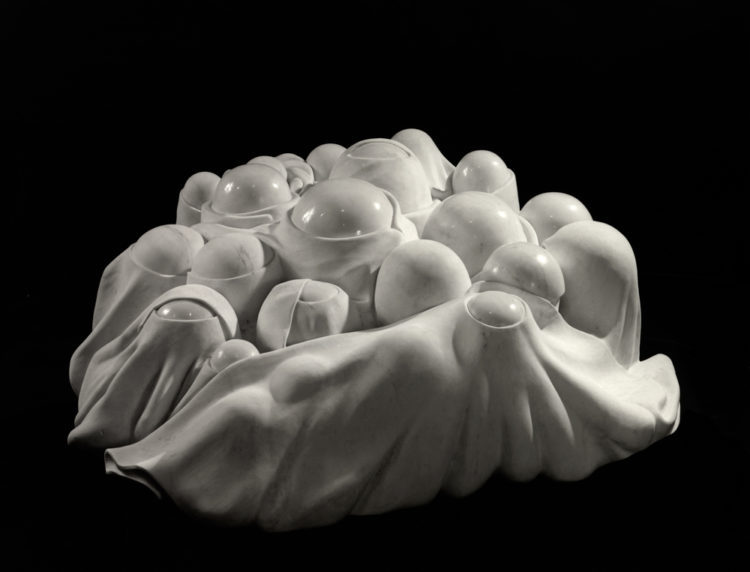
Louise Bourgeois, Cumul I, 1969
Tuesday, February 20, 2024

"Because I ain't gonna play chords"

.... Because to transform states into moods is already to strike a blow against them, and the question of whether or not the mood itself is justified is kind of beside the point; we are dealing with the construction of a form of language in which the mode of existence of everything that is there is being re-ordered or re-determined----and the corresponding accession of possibility for speech or thought is the thing to be emphasized. The more perishable the moods, the greater the area in which it is possible to move.----Because as states dissolve into moods we feel ourselves to be liberated, we are suddenly able to -move- again, and this has an inevitable knock-on effect on the tone of our language, and through language on life as well. Because the most expressive forms of political certainty (f.e.) themselves tend to come from the repetition of simple musical forms, with tonal or rhythmic motifs as gateways to corresponding emotional states. So that eventually it all starts to fit together----the transitions at the simple level of the intentionality of what is said are existential and not moral transitions, and when I say that after this transition it is possible to say anything I am expressing a truth of feeling and not a moral truth, having to do with the actual overcoming of subjective blocks and inhibitions. The point is to define the approach to language that corresponds to the minimum of unnecessary subjective aversiveness and constraint. This is a practical attempt to counteract some of the objective constraints that turn language into a painful knot of self-clarification, in which subjective energies congeal into personal and political despair (=inertia at a higher level). Everything that is carried out at the level of 'form' or mode is done so in order to establish a terrain on which the poet -feels- powerful and free, in the understanding that this is turn controls the tone of the work being produced, the aim being to establish the foundations for a poetry that runs contrary to the dominant minimalist abstraction (=self system); a system of merely logical extremes (of judgement) that rapidly metamorphose into interiorised rage; a complete breakdown in the capacity to deal with this. And the important thing to remember is that this doesn't have anything to do with -states-, with hope or despair or hopelessness etc., but instead has to do with the relation to the -meaning- of those expressive states and the primacy of whatever procedures or elements of the language prevent us from being locked into them.

... Because what I have realised is that it's only using a style in which the principle of development or progress is a means of perpetual negation or dissolution that it becomes possible to say anything at all; because it's only then that the register of the statement ceases to be determined at the same time as its assertion. I wanted to write a poetry in which even the worst slurs and attacks of rage could appear with an almost tragi-comic fragility, as the most exquisitely delicate lyrical moods, permanently at risk even at the moment of their first onset of dissolving or flowing away, as if all the brutality of our experience and our failures of responsiveness were to appear or reappear inside the thinnest and finest shell of ice, and to disappear alongside of it. Lyric poetry defined as:

'an unbelievable, horrendous existence that purchases the beatifications of grace through a shocking helplessness in absolutely everything that is of use, the happiness of a permanently bleeding wound, for which no medicinal herb on this earth blooms.' (Emil Staiger)

I wanted to take all the worst experiences, the crudest thoughts and to make them as fragile as lyric poems, not because the desire to hurt someone weak is legitimate if it is ephemeral -but because this is a method of reducing the constraints that we feel when we relate to language as a medium-. When we feel no constraints, we feel no desire to lash out. 'Morality' as downstream from compositional orientation and not vice versa.

... to expand the domain of that horrific, unbelievable existence

Saturday, January 6, 2024

New Year's letter to R, R, J ('Paper is my weakness')


R, I'm writing back to you on my penultimate day in London, it's just past 6 p.m. and I've been staring at a blank screen for more than an hour. I'm not sure whether or not I'll have time to finish. Thinking in broad or abstract terms has felt painful for me during the last months, and over the last three weeks, during this end-of-year 'holiday', the feeling has gotten worse: everything seems out of sorts, out of sync, the contrast between the enforced celebrations of the season and the knowledge of what continues to unfold is jarring, hurtful; the thoughts in my head seem sterile and dry.

I feel as if we've been talking about myths a lot. Sometimes it feels like the entire media space is filling up with nothing but them: the myth of Israel as the lonely liberal democracy in the shatter space of the 'authoritarian Middle East', the myth of immemorial Biblical Judea and Samaria, of Romantic Palestinian peasant indigeneity, of armed liberation struggle and Fanon and Algeria and the 1950s, a kaleidoscope of myths, the snake and the eagle wreathed in flight, Shelleyan Good and Evil, Violence and Non-violence, Meaning A and Meaning B. All of these culminate in the conflict between the ideology of zionism (/liberal democracy) and the ideology of anti-zionism (/national liberation), which confront one another not as a history and a counter-history but as mass communication spectacle, a thing that has never existed before that is played out in a language already brought to perfection more than a century ago. Here's a passage from Yeats that I just came across, from 1909:


It's a good description of Twitter isn't it. I've been reading Yeats during this whole Xmas period. He's an interesting case study on 'myth'. His work exists in the empty grey undefined space between anti-imperial nationalism and National Socialism: the 'myths' that he chose in place of the 'machine logic' of political argument are self-consciously *racial* myths, his images are racial images, the dream of another reality becomes the febrile anti-Semitism of volkish nationalism, fears that the abstract Jews are behind it all, 'pulling the strings': YOU THROW YOUR MONEY ON THE TABLE AND YOU RECEIVE SO MUCH CHANGE. The poetry is important to me but it also suddenly reminds me of Adorno, the idea of the dialectic as the anti-image, the imageless image of words and things that transform into their opposites: images that emerge silently out of the practice of abstraction itself, Schoenberg and 12-tone, Beckett, the Bildverbot, all those philosophy seminar room words that I haven't thought about in years. And I read Yeats' Irish mythography and I see the motives for that movement of aesthetic thought in a new light, as a poetic problem, not just as a hostile reaction to Jung, the 'collective unconscious' etc. The question Yeats poses to himself is: where do images come from? His answer is, from the 'blood' of a specific national tradition, rooted in a landscape, geography, social formation. The problem with this as a concept of the visual in language is of course principally that it is wrong; images can come from anywhere, the identification of the diasporic with the 'abstract' and 'logical' is obviously false, or so it seems to me; and the limitations of the inversion of this wrong idea can be seen in the existence of a veritable miniature culture industry in the German-speaking world, the entire reason for existence of which is to re-hash, in increasingly lurid and hierophantic terms, the essential elements of Adorno's own polemic against the mythical element in art and politics: as the aesthetic expression of a form of racial nationalism (see: anti-German criticisms of the 'post-colonial'). Is it a measure of my confusion that I think Yeats' comment about 'political questions' at the 'Arts Club' is prescient and true, and that Adorno's suspicion about mythical images is true also? At this point both tendencies, or both elementary programmes, are equally politically untenable, equally artistically incoherent. Can the incoherence of both somehow become a virtue? When I think about public political speech, I think about Shelley's snake and eagle wreathed in flight: a dramatic and significant clash of ideologies that nevertheless takes place many miles above the heads of actual speakers; a hypostatisation, or a spectacle of estrangement. I also think about the word 'structuralism'. As we know, the structure defines what can and cannot be said. It feels kind of sick to try to talk about this, while people are being wiped out 30 or 50 at a time, every day, as a result of targeted aerial bombardment, but isn't this also the implied reality in the old cliche about moving deckchairs around on the deck of the Titanic? The deckchairs are possible positions within a structure. The deck is the structure itself, or perhaps it is conceptual language as such, the entire static ensemble of available moods and registers in language as we live within and perceive it. The ship is the unperceived or imperceptible: the catastrophe as noumenon, or vice versa. (The only difference between this and the standard idea of the numinous as an object of poetic or 'artistic' knowledge is that, in this case, the numinous is *sinking*.)

Yesterday I went with M to the Anna Mendelssohn exhibition at the Whitechapel Gallery. The exhibition is all in one small room on the third floor. Blue walls, three vitrines in the middle of the room, which is divided in two by a glass screen, on one side of which is the Whitechapel Gallery reading room. It felt a little bit like walking into Mendelssohn's head. I mean it feels intrusive to access the work like this, which is so private and often so anguished, a corpus that existed for decades only in holograph manuscripts that no one except Mendelssohn herself ever opened, and people wander in and out of it and take a quick look round and then walk back down the stairs to the bookshop or the cafe, or the blockbuster Nicole Eisenman exhibition for which you have to pay £15 or something to get in. No one really cared about Anna Mendelssohn's work while she was alive, but now at the Whitechapel Gallery you can just stroll right into her skull, no one even asks you for a ticket, the door is open and then it's just blurs of yellow and red watercolours, confusions and disappointments, and yearning, angry little line drawings that feel like polemics about something, perhaps about space itself, perhaps about -- it's really impossible to tell, because the drawings don't have any words in them, because they're just frameworks for words that didn't come, because the community that would have had to exist in order for them to have done so never arrived; and so everything exists in a state of incompletion, as a 'framework' in more or less the way that Yeats's fifteen apparitions -- 'the worst a coat upon a coat hanger' -- were a framework. They are like sketches for statements in a language that hasn't been invented yet.

There are also at least two or three actual invented alphabets, one of them filling up an entire sheet of paper with tiny a-semantic ideograms, spilling out to the far limit of the page: a private language.

I feel as if two spaces face into one another. One is the space of 'a debate in the Arts Club on a political question': a structure in which every imaginable position 'was just used by somebody or other', and in which the language speaks the speaker *and not the other way round*, and the other is a blue room in the Whitechapel Gallery, containing the inside of the head of the dead poet and visual artist Anna Mendelssohn, slightly simplified to fit within a space approximately 60 sqm, in three glass boxes and on three walls. The first space is compulsion, intellectual aridity. The second relies on a sort of prurient psychic taxidermy. 'yet i'll tell you something' (this is Mendelssohn speaking) 'when i slept over in the spare room in newnham, the hell on the right side of my brain disappeared, last night, i heard cello music'. So that to walk into that blue room and to peer into the glass boxes at the hell on the right side of the brain amounts to a kind of complicity in human experimentation, in sadism, even as walking around the hell in Anna Mendelssohn's brain makes the hell disappear in my own, so that suddenly for the first time in weeks I can see clearly the hold that the 'first' space had over me, the days spent arguing in an Arts Club debate in my own mind fade to black, and it's only because Mendelssohn's brain has been preserved and displayed like this that I am able to write to you about being in a blue room in the Whitechapel Arts Club ('Art Gallery') on 2 January 2024: that I am delivered back into my own life as a reality of colour and perception and not only of abstract analysis.

*

I spent a lot of time at the whitechapel gallery looking at the first mendelssohn poem, which is printed on the wall next to the door to the exhibition. 'you who had a lady in your house / priding yourself on your distant discontent'. the poem is surrounded by an enormous amount of white wallspace. her words compete with that space: 

you who had a lady in your house
priding yourself on your distant discontent
are not going to be satisfied by me
not now as then you will not be given
the pleasure of the power of your deceit
on oath or affirming

it's a poem of accusation written about a male poet, a judge of her work ('on oath': trials of the seventies), almost a curse or a prophecy. this is obvious, right? the grammar is clear until the beginning of fourth line: 'not now as then'. this is obvious. 

but the abundance of white space on the wall is respectful, auratic, a crown of unused possibility. mendelssohn herself is like yeats: she is obsessed with possibility as negative wealth, negative crown, negative aura. the work says: this is the art that takes the place of the art that i would have made *if* my life hadn't been ruined. and that i am a ruined version of myself, that i stare out at myself as i would have been, into the empty space that surrounds my work as the annulled possibility of who I am, which is always pushing its way back into me with its webbed feet like some monotonous, Yeatsian swan, a predator in the guise of who I was (to be), is itself the central lesson of the work: a lesson that its situation here automatically annuls. when i went to sleep in your spare room, the hell in the right side of my head went away (white space, dead palestinian poet, respectful silence, rain outside the whitechapel gallery, quick bus ride to the vietnamese restaurants on the kingsland road, street, light, awkward fumbling conversation, hell) 

the phrase ambiguously suspended. the paintings and poems she wanted to paint and to write (and that she might have painted and written) occupy the empty space around the poems and the paintings that she did. when a.m. draws the characters of an imaginary alphabet, she makes sure that the characters go all the way to the furthest margins: the existence of auratic empty space is pushed away, fought off, kicked against, -- 'you ... are not going to be satisfied by me' is the dialogue of this ruined self speaking in ambivalent tones of acquiesence and defiance to the annulled and perfect self it couldn't be, growing together with predatory empty space like leda with the beautiful swan, tasteful, annihilating, we are reliant on the philanthropy of our family of donors, 

'... when i slept over in the spare room in newnham, the hell on the right side of my brain disappeared, last night, i heard cello music. when this happens, as it has done with both piano and orchestra, the space filled amounts to /' then the manuscript breaks off. 

imagine a wall in a different kind of exhibition space, call it the MEANING of the first one. the empty space is not white and auratic, but instead has been somehow siphoned out of you. 'possibility' here is not WEALTH but terror, predation, dereliction; not who you can become, or what you might make (which could both filter back into substance of what you have made, and are), but the threatening encroachment of what you could have done and might have been. as this 'auratic' space expands, so too do you dwindle and decrease, you fold up into ever smaller and smaller versions of yourself, a sheet of A4, a postage stamp, a fingernail, nothing, pure possibility, an empty exhibition blazing into a head: its title: *this is the language of a person who is not what they were meant to be*. worthless nugatory scum, having sustained damage here, here and here, having been irreversibly and irretrievably delayed. having wasted years in a prison during what should have been your twenties. black blot, spilt ink, 

let me step back a bit. In his email from a few weeks ago, R. said, about the symbolic dimension of the global palestinian solidarity movement, that 'there’s been a long, very long investment in education, in symbolism, in weaponization of this conflict; because there’s been decades of encouraging people to read it as their struggle, as an infinite number of struggles'. this is one reason, though not the only one, why the attack on gaza has a different resonance 'in the west' to the civil war in ethiopia, or in sudan. 

The first way of opening this statement up is to say that the investment has to be an investment *of* something. We can talk about this investment using the conventional 'Marxist' vocabulary, in terms of expenditure of human labour, or the conventional mythological one, in terms of expenditure of blood:

For Patrick Pearse had said
That in every generation
Must Ireland's blood be shed.

Which is Yeats again. In either case, we're moving away from a language in which 'meanings' can be adjudicated by means of logic. The words scab over and rot and grow evil flowers: political statements are no longer capable of being limited to a fixed number of logically permissible 'ideas', which can then be organised (as we habitually organise them) on a neat spectrum, with a centre and two opposite 'extremes'. language no longer suggests a closed system of reference: this is what R. indicates when he says that Palestine 'has a MEANING', that we are entering into a new system of signification, different to the one that we usually inhabit.
 
And this is close to what I meant earlier, when I said that being in the whitechapel exhibition space is like being in mendelssohn's skull. anna mendelssohn is sacrificed and inside of her dead head with its blue walls her works are put on display. the works go from being private manuscripts to the furnishings of a kind of mausoleum. and as death grows over their surfaces everything that was not lived + not expressed + not achieved in them is changed, poem by poem, by means of a kind of mutant alchemy, into MEANING. 'The question' (R. asks) 'then becomes what we do with that, with the knowledge that truly the masses are on the streets because palestine has MEANING, i.e. it’s been imbued very deliberately with a weight of a thousand incontrollable signifiers'. and for me the answer is about potential in this specific sense. if you treat the potential as a possession whose 'symbol' is a gratuitous expanse of auratic white wallspace, then the WHITECHAPEL goes back to being the whitechapel, the terrifying space around and within a.m.'s poems goes back to being the kind of sentimental deadzone that its Arts Council funders want it to be, our own irreversible ruination disappears as a creative element of the work and the mausoleum becomes an art exhibition again, a beautiful and respectful one, an act of love performed by the living for the dead; and it seems to me that palestine and PALESTINE have a connection that could be thought of in almost the same way:

'we all know implicitly that our 'private thoughts' are only half inside of us, half a spectacle of violent mythological conflict taking place in the sky above our heads. This is what most of my recent writing has been about, my poems as well as my garbled contribution to this discussion: just a basic an attempt to come to terms with this reality, to admit it to myself. MEANING is not something fenced off in a little garden of 'literature' that we go to water, after we've gotten back from work at the rational explanation factory. It is the rational explanation itself.'

anna mendelssohn is refaat alareer. 'not now as then you will not be given', but in another sense. until we see what isn't meant and what can't be as a part of what is,

happy new year,
Danny


undispatch from ny

  i am on that non-verbal gerbil wheel amaretto        and i've often also been there for years now, too many count spitting in the     ...